Seamless Patterns with Radioactive Hazar: A Unique Design Element for Fabric and Decoration
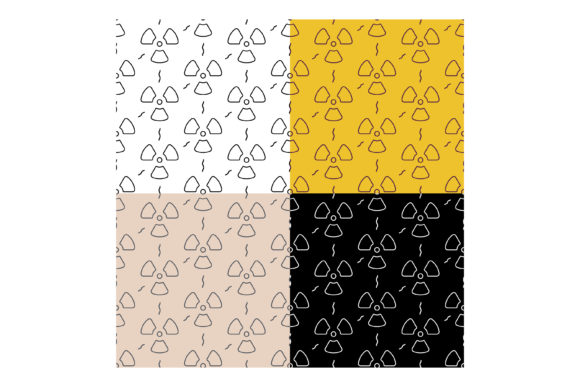
Seamless patterns with radioactive hazard signs offer a distinctive visual element that blends industrial aesthetics with practical design. These patterns, often created in vector format, are ideal for use on fabric, signage, or decorative applications where a clear and recognizable symbol is needed. The radioactive hazard sign, known for its bold yellow background and black symbols, has become a powerful emblem of caution and danger. When integrated into seamless patterns, it can serve both functional and artistic purposes.
The key feature of these patterns is their ability to repeat without visible seams, making them suitable for large-scale printing or continuous designs. This makes them particularly useful in textile design, where consistency and uniformity are essential. Whether used for clothing, home decor, or industrial uniforms, the seamless nature ensures a professional and polished appearance.
What Makes Seamless Patterns with Radioactive Hazar Distinct?
Unlike traditional hazard signs that are typically standalone images, seamless patterns incorporate the radioactive symbol into a broader design. This allows for greater flexibility in how the symbol is used. Instead of being confined to a single location, the symbol can be repeated across a surface, creating a cohesive and visually striking effect.
One of the primary advantages of these patterns is their adaptability. They can be scaled up or down without losing clarity, thanks to the vector format. This makes them ideal for both digital and physical printing processes. Additionally, the seamless nature of the pattern ensures that there are no visible breaks or overlaps when the design is repeated, maintaining a clean and professional look.
Another distinguishing factor is the versatility of the radioactive hazard sign itself. While it is primarily associated with safety and warning, it can also be used in more creative contexts. For example, it may appear in fashion design as a statement piece or in graphic design as a thematic element. This dual functionality sets it apart from other types of patterns that may be more limited in their application.
How Does It Compare to Similar Options?
When compared to other types of seamless patterns, such as floral, geometric, or abstract designs, the radioactive hazard pattern offers a more specific and symbolic approach. While floral patterns are often used for soft, natural aesthetics, and geometric patterns for structured, modern looks, the radioactive hazard pattern brings a different energy to the design space.
It also differs from standard hazard signs, which are usually static and not designed for repetition. Traditional signs are meant to be read at a glance, while seamless patterns allow for the symbol to be part of a larger visual narrative. This makes them more suitable for applications where the symbol needs to be integrated into a broader design rather than standing alone.
In terms of alternatives, some designers may opt for similar symbols, such as biohazard or radiation warnings, but the radioactive hazard sign has a distinct visual identity. Its unique combination of colors and shapes makes it instantly recognizable, which can be an advantage in both functional and artistic settings.
Strengths and Tradeoffs of Using Seamless Patterns with Radioactive Hazar
One of the main strengths of using these patterns is their strong visual impact. The radioactive hazard sign is highly effective at drawing attention, making it a good choice for designs that require immediate recognition. This can be beneficial in environments where safety information needs to be clearly communicated, such as in laboratories, industrial settings, or public spaces.
Another strength is the ease of integration into various design projects. Because they are available in vector format, they can be easily modified, resized, and adapted to different layouts. This flexibility is especially valuable for designers who need to work with multiple formats or platforms.
However, there are also tradeoffs to consider. The radioactive hazard sign is inherently associated with danger and caution, which may not be appropriate for all design contexts. In some cases, the symbol could be misinterpreted or cause unintended reactions, particularly in consumer-facing products or general decoration.
Additionally, while the seamless nature of the pattern is a benefit, it requires careful design to ensure that the repetition does not become overwhelming. If not balanced properly, the pattern could appear cluttered or lose its intended impact. This means that users must be mindful of how the pattern is applied and whether it aligns with the overall design goals.
Best Fit Situations and Limitations
Seamless patterns with radioactive hazards are best suited for applications where the symbol’s meaning is relevant or intentional. For example, in industrial or scientific environments, they can serve as a clear and consistent warning system. In fashion or art, they can be used as a bold statement or thematic element.
They may also be useful in educational materials or safety training programs, where the visual representation of risk is important. In these cases, the pattern can help reinforce the message without needing additional text or explanation.
However, in situations where the symbol’s connotations are not aligned with the intended purpose, it may not be the best choice. For instance, in home decor or casual clothing, the radioactive hazard sign could be seen as inappropriate or off-putting. In such cases, alternative patterns with less intense symbolism might be more suitable.
Another limitation is the availability of high-quality, ready-to-use patterns. While there are many resources online, not all provide the same level of detail or customization options. Users should carefully evaluate the quality and flexibility of the patterns they choose to ensure they meet their specific needs.
When to Choose Seamless Patterns with Radioactive Hazar
Seamless patterns with radioactive hazards are a good choice when the goal is to create a design that is both visually striking and functionally meaningful. They are particularly effective in environments where safety, warning, or industrial themes are central to the project.
If the design requires a consistent and scalable symbol, these patterns can offer a reliable solution. They are also ideal for projects that involve large-scale printing, where maintaining a seamless and uniform appearance is important.
For those exploring alternatives, it may be worth considering other types of patterns that align more closely with the intended aesthetic or purpose. For example, if the goal is to create a more subtle or neutral design, other styles may be more appropriate.
Ultimately, the decision to use seamless patterns with radioactive hazards depends on the specific needs of the project and the context in which the design will be used. By understanding the strengths, limitations, and potential applications of these patterns, users can make a more informed choice that aligns with their goals.